Powered by Blogger.

Pages

Saturday, April 20, 2019

Flash Pattern Strategy by Stock Alphabets


If you are keen to know about the Flash Pattern  and how to trade it then this Flash pattern Stock trading strategy will put you in the right direction.
I must warn you though: if you are a new Stock trader, trying to find a Flash Pattern on your chart may be quite difficult at first.
Why?
Because first you have to identify the XYZ pattern and then once that happens, next thing you need to look for look for is a Flash Pattern.
And a Flash Pattern only forms after the XYZ pattern.
That is what makes it confusing for many.
So if you are going to find it difficult, then try using this Flash Pattern .
What I am going to present here is the most basic form of Flash Pattern trading because If I were to write in detail about how to trade the Flash Pattern, it would be too much information and I don’t want to confuse the heck out of you.
So What Is A Flash Pattern?
In order for you to understand the Flash Pattern, you need to know what a XYZ chart pattern is and in the XYZ chart pattern Stock trading strategy, I’ve explained that to an extent what that is.
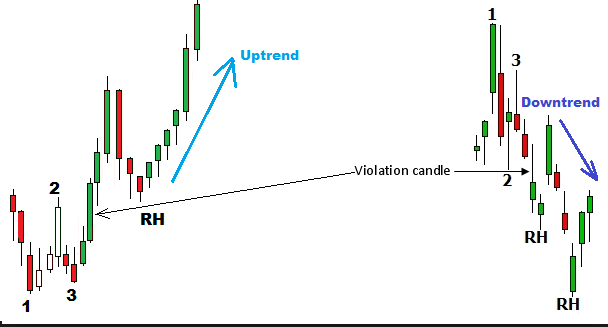
This chart bellow shows what a Flash Patterns  in a downtrend and uptrend:

§  note that first comes the XYZ pattern
§  and second comes the Flash Pattern.
§  note that the violation candlestick is the candlestick that breaks past point 2 of the XYZ pattern.


Flash Pattern Simplified
Most explanations tend to make Flash pattern confusing but my explanation will take the confusion out once and for all.
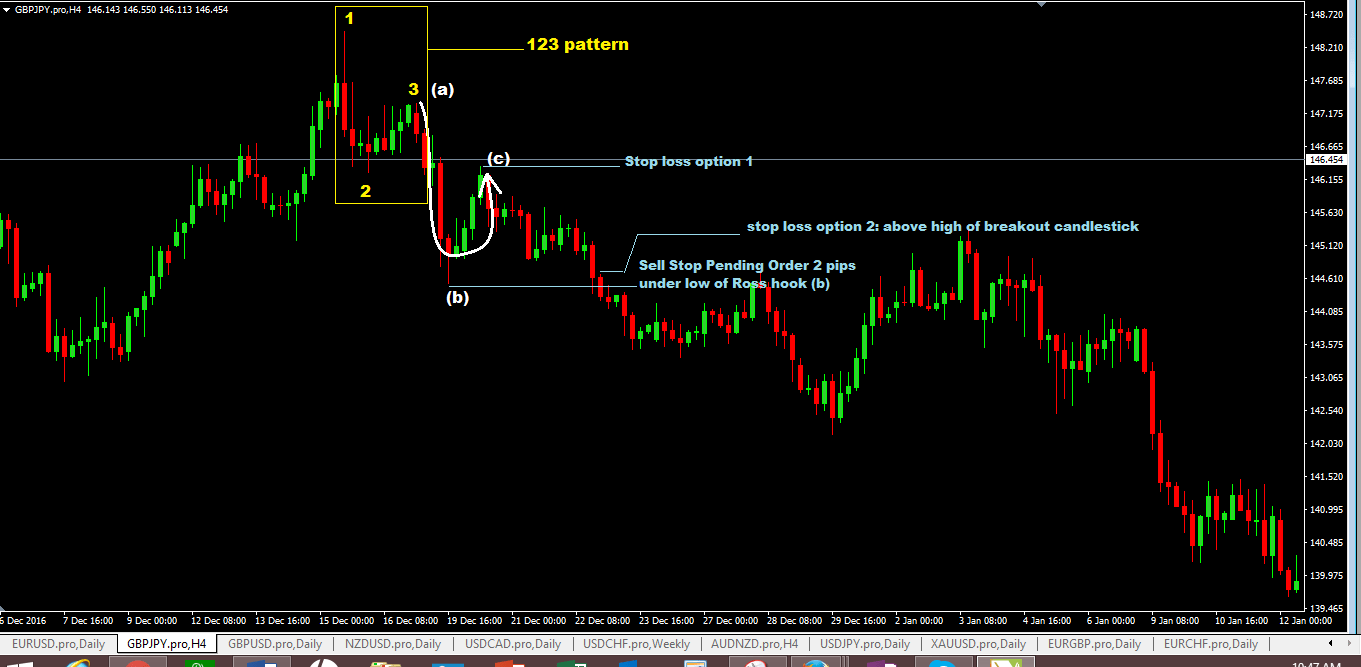
Look at the Flash Pattern and can you see a similarity between it and the XYZ pattern? I you cannot, then have a look at the chart below:
§  first part is the XYZ pattern
§  then the second part is the Flash Pattern that I’ve marked as “Z-Y-Z.”
Here’s the thing:
the “a-b-c” is another XYZ pattern if you were to mark “a” with X, “b” with Y and “c” with Z.
So in simple terms, a Flash Pattern is another XYZ pattern that forms right after the first XYZ pattern…That’s basically what a Flash Pattern is: two XYZ patterns forming right after the other.


How To Trade The Flash Pattern
There are a few ways to trade the Flash Pattern but I’d like to show you the the most simplest one: trading the breakout of of Flash Pattern:
1.      place a pending sell stop order at least 2 pips below the low of the Flash Pattern which is marked as “b” on the chart below in a downtrend situation or for a uptrend market, place a pending buy stop order 2 pips above the high.
2.      there are two stop loss placement options: place above the high of the breakout candlestick or just above point “c” for a downtrend. Do the exact opposite for a pending buy stop order.
3.      for take profit targets, use a previous swing low as profit target for a sell order and a previous swing high for a buy orders. If these swing lows/highs can be found or they are too far away, then use the risk:reward ratio of 1:3 to calculate your profit target.


Disadvantages of The Flash Pattern Stock Strategy
§  notice that price has moved already after it made the XYZ pattern and you’d be jumping in a bit late if the start of a new trend was confirmed after the XYZ pattern.
§  can be a difficult pattern for beginner Stock traders to identify and trade.
§  if the distance “stretches” between the formation of XYZ pattern and the Flash Pattern, avoid trading it.
§  nothing is ever perfect in Stock trading, there will be false breakouts of Flash Pattern and your stop loss can get hit.
Advantages Of The Flash Pattern Stock Trading Strategy
§  Trading raw price action without the clutter of indicators.
§  a simple breakout trading with the same king of trading rules as the XYZ pattern Stock trading strategy
Don’t forget to share by clicking those sharing buttons below.  Thanks


Thursday, April 4, 2019

Candlestick Charts Stars

What are Candlestick Stars?

So far, in Part 1, we covered the construction of a candlestick chart and common candlestick reversal patterns.
Well, in this article I want to continue down this path and discuss another powerful reversal pattern - candlestick stars.
Stars have small real bodies which gap away from a large real body that precedes it.

Candlestick Example

Candlestick Star

Types of Candlestick Stars

The key rule to a star is that its' real body does not overlap the previous candles real body. There are several variations of the star pattern:
  • morning star
  • evening star
  • doji star
  • shooting star.

Psychology of the Candlestick Star Pattern

As a star has a small real body, it represents indecision by bulls and bears.
While the primary trend is still intact, the presence of the star is the first sign that the trend could turn.
This lack of follow thru on the trend will lead to a number of things.
Some traders will exit half of their position to lock in profits.  Others will use the star to establish levels for both entries and stops. So, while the candle is small, it is powerful in that it makes traders take notice and react accordingly.

Candlestick Star Variations

Morning Star

Morning Star
The morning star candle is a bottom reversal signal that comes after an extended downtrend.
This pattern is a three candle reversal setup. The first two bars are the typical star setup discussed above. The major difference with this pattern is the third candle in the formation. It is a very strong green candle, which does not have to be a gap and closes at least halfway into the first candle.

Assessing the Strength of the Morning Star Signal

The further it eats in the first bar, the more bullish the formation. Outside of morning star showing itself, look for other indications that this pattern is for real. For example, you want to see high volume in the third candle, indicating strength. I have noticed that the morning star works very well when it occurs at previous support levels.
On the other side of the coin, if you buy a stock that prints the morning star, be prepared for some sort of pullback. It is not uncommon for that to happen nearly 50% of the time. If there is a violation of the lows, then the morning star is negated.
Let's take a look at the morning star candlestick at work with a live trading example.

Morning Star Trading Example

VLO Morning Star
This is a beautiful morning star setup.
First of all, the morning star came in at previous support near the 60.37 level. The star candle came in the form of a hammer.
Refer back to Part 1 to learn more about the hammer. There was high volume that came along with the hammer, and this was an even bigger sign that this level would hold as support. The following day, the stock accelerated with a gap higher and closed well into the top half of the first bar.
As I said earlier, the presence of this pattern does not indicate an immediate rally. As you can see, the gap created from the second to the third bar was backfilled. Smaller gaps, such as this one, tend to fill in the short term. Even if one had waited for the high of the third candle in morning star to be broken above, five points could have been made in a short amount of time.

Evening Star

The evening star candlestick is the bearish version of the morning star.
It is a top reversal pattern that occurs after a sustained uptrend. The evening star is also a three candle pattern.

Evening Star Formation

The first candle is a strong bullish candle. The second candle is the star, and the third is a red real body that closes well into the first candle. Again, as with the bullish morning star, the third candle in the evening star does not have to be a gap. Here are a couple of factors that increase the chances of this pattern succeeding:
  1. The real bodies of all three candles do not overlap
  2. The third candle closes well into the first one; preferably regaining 75% of the candle
  3. Volume should lighten up on the first candle and increase on the third.
Just as the lows of the morning star pattern provide support, the highs of the evening star candle formation serve as resistance to any further upside movement.

Doji Stars

A doji is a candle that lacks a real body. This means the open and close of the bar are essentially the same. It has a strong significance after substantial advances or declines. The lack of direction is a potent reversal signal, especially if it is followed by a candle in the anticipated direction.
When a doji is the star within the morning star and evening star patterns, the formations are known as the morning doji star and evening doji stars.
Doji Star

Abandoned Baby Candle

An extremely powerful version of the doji star is the abandon baby top or abandon baby bottom. This pattern is the equivalent to what some of you have heard of through using bar charts, the island reversal. The abandoned baby candlestick has a doji as the second candle with a gap on both sides. Notice, the Evening Doji star image above is an abandoned baby top, while the morning doji star is not.
If you think about the psychology of this setup, the first gap came in an exhaustive fashion.
The stock was already in a strong uptrend or downtrend, and then it made a gap which closed near its open. This was the first sign that the directional pressure was fading. Now, with the third candle gapping in the opposite direction of the trend, we now have confirmation that a more significant trend reversal has taken place.

Shooting Star

Shooting Star
The final star variation we will discuss is the shooting star which occurs after a strong uptrend (or the inverted hammer that occurs after a strong move down). The shooting star has a long upper shadow with a small real body at the lower end of the candle. This pattern usually presents itself as a sign of a short term correction rather than a more potent reversal signal. The shooting star is telling us that the markets rally could not be sustained. The market opened at or near its lows, shot up much higher and then reversed to close near the open.
Ideally, the real body of the shooting star should gap away from the previous candles' real body. While it is not necessary, it adds confirmation to the validity of the impending reversal. Additionally, take a look at the previous candles; many times you will see overhead shadows on those candles as well. This indicates that the stock is struggling to go higher; just another clue as to what might happen. When a shooting star forms near a resistance level, which also was created with a shooting star, a very powerful resistance level is created. As mentioned before, the shooting star is a short term topping formation, and any break above the high of this candle negates the ramifications of the formation.
There is one variation to the shooting star; it is known as the gravestone doji. The gravestone doji is a shooting star with virtually no real body, the open and close are exactly the same. This formation is more powerful than the typical shooting star as portends a more serious reversal.

In Summary

Candlestick patterns are a great way to assess the trend of a stock. The key to its secret is the fact candlesticks are a visual representation of price action.
These reversal candles all tell the potential of a trend change or continuation but remember you need other validation points. These can come in the form of a technical indicator or chart patterns.